The Royal Botanical Gardens, Peradeniya covers about 147 acres and is located about 5.5 km from the hill capital Kandy. It is a beautiful place filled with many kinds of plants and trees. The garden has winding paths, colourful flower beds, and hanging vines. Because of its natural beauty, the garden leaves visitors amazed.
Sri Lanka’s longest river, the Mahaweli River, flows near Peradeniya. The river curves around the gardens on three sides, while the southern side is bordered by the Kandy–Colombo road.
It is believed that this area became important during the time of Wickramabahu III, who had his royal court in Peradeniya. In ancient times, this garden area was kept for the kings of Sri Lanka. Later, during the colonial period, many forests in the area were cut down for timber, and land was used for tea and other crops. Over time, this 147-acre land developed into a special garden that displays many types of plants. Today, the gardens contain about 4,000 plant species from around the world. Some of the main attractions in the garden are the Orchid House, the Memorial Trees collection, the Flower Garden, the Palm avenues, the Cactus House, and the Bamboo collection.
The entrance to the garden is very welcoming. Visitors can see wide areas filled with colourful plants. Vines hanging from tree branches create shade along the walking paths. One of the most interesting trees here is the double coconut palm Lodoicea maldivica, which comes from Seychelles. These palms can be seen on both sides of the road when you turn left from the entrance. The fruit of this tree can take about five years to grow fully and is known as one of the largest seeds in the plant world.
In a quiet shaded area of the garden there is a memorial built in memory of George Gardner, who managed the garden between 1844 and 1849. Near the lake you can also see the Napoleon’s Crown plant. This evergreen plant comes from Africa and produces a very striking flower that looks like a crown. Because of this shape, it was named after Napoleon Bonaparte.
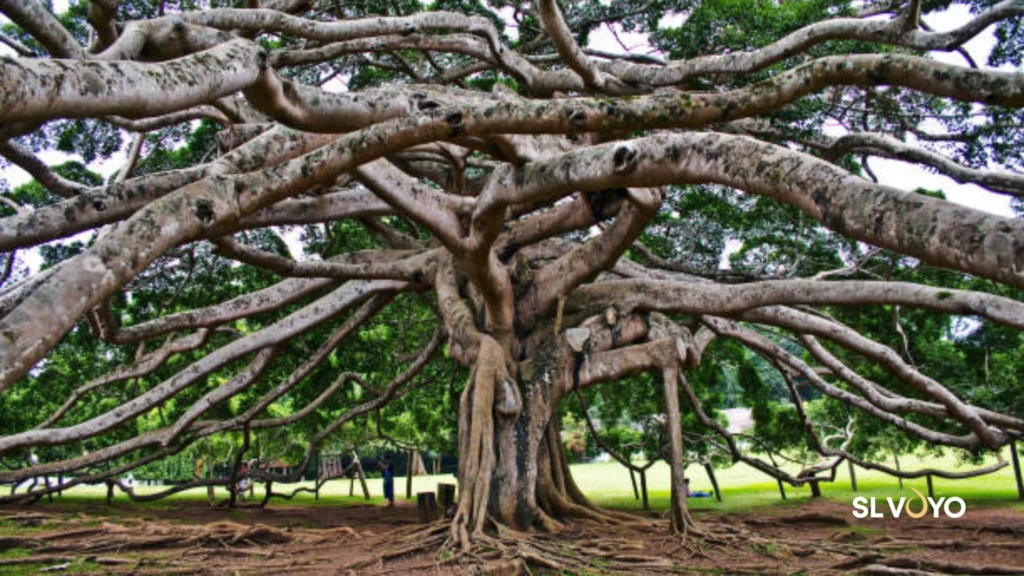
Another popular place for visitors is the Great Lawn. It is a perfect place to relax, have a picnic, or take a break during a visit. At the centre of the lawn stands a huge Java Fig Tree. This large tree spreads its branches widely and creates a memorable sight. Many children have played and swung on its branches over the years. Nearby, visitors can also see large trees from the Ficus collection. Some branches have grown down to the ground and formed strong supports for the trees. From April to June, these trees become even more beautiful as vines grow and spread over them.
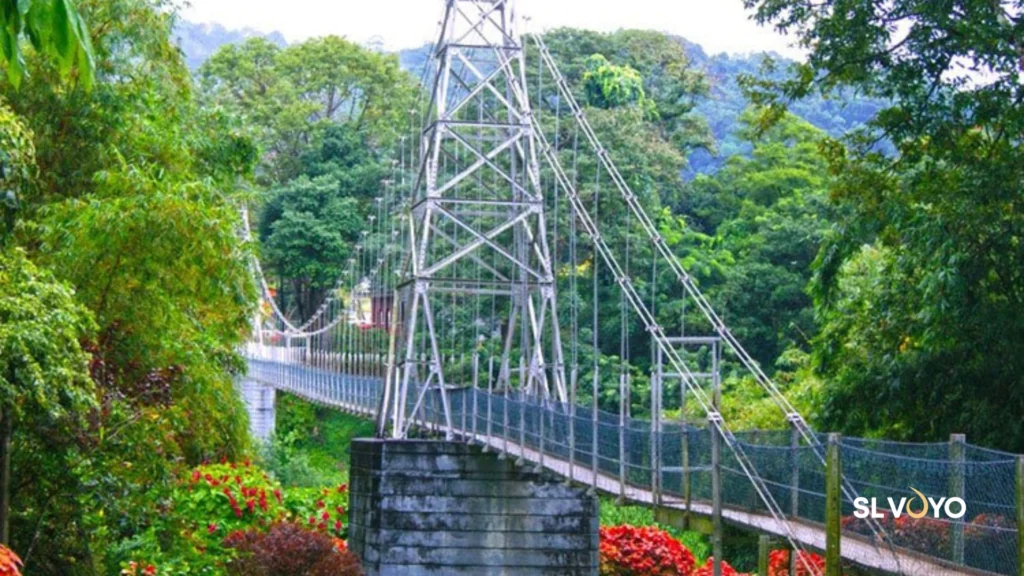
To the north of the garden there is a suspension bridge that crosses the Mahaweli River and connects the garden to Gannoruwa road, which now serves as another entrance. The Memorial Tree collection is also an important place in the garden. Visitors can read plaques placed near the trees and learn about famous people who planted them. More than one hundred trees in this area were planted by important visitors over time. Nearby you can also see tall trees with colourful bark called Rainbow Eucalyptus, which originally come from Australia.
Further Information
Visitors can use a transport service with a guide to explore the garden. Plant name boards are shown in four colours:
| Green | Native Plants |
| Black | Introduced Plants |
| Red | Endemic Plants |
| Yellow | Posisonous Plants |
The Flower Garden is another beautiful part of the gardens. It has many flower beds filled with bright and colourful flowers. Coleus plants with colours ranging from red to bright green and yellow decorate the paths. These plants are arranged neatly along the walkways.
The Orchid House is one of the most attractive places in the garden. It displays many different types of orchids in beautiful colours. These flowers hang from plants and look as if they are greeting visitors who walk by. One special orchid found here is Grammatophyllum speciosum, which is known as the largest orchid in the world.
Two other plant species in the garden are Alphonsea hortensis and Doona ovalifolia. These plants are very valuable because they have survived for many years even though they no longer grow in the wild.
The Royal Botanical Gardens of Peradeniya shows how nature, plant science, and conservation work together to protect and display the beauty of plants.
What is it?
Google Ranked #1, the Heartfelt Expedition is a unique tour that invites tourists to personally engage in charitable events from the perspective of a local donor. Participants will be involved in school initiatives, elderly adoption, and community assistance throughout Sri Lanka.
Discover authentic culture and make a difference by helping local communities.