In a small town in the foothills of the central Highlands lies a church that not only contains a statue believed to have miraculous powers, but also plays a significant role in both the his stoic and cultural activities of surrounding area and its inhabitants.
It can be said that the history of religion is also the history of people. Many of the world’s greatest monuments are religious. This is very clear in Sri Lanka. From the bright white beauty of the Ruwanweliseya in Anuradhapura, to the colorful and unique Jami Ul-Alfar Mosque in Colombo, and the simple dignity of the Groote Kerk in Galle Fort, places of worship in Sri Lanka show the long history of the island. These places show how many cultures met, mixed, and influenced each other in the country over thousands of years.
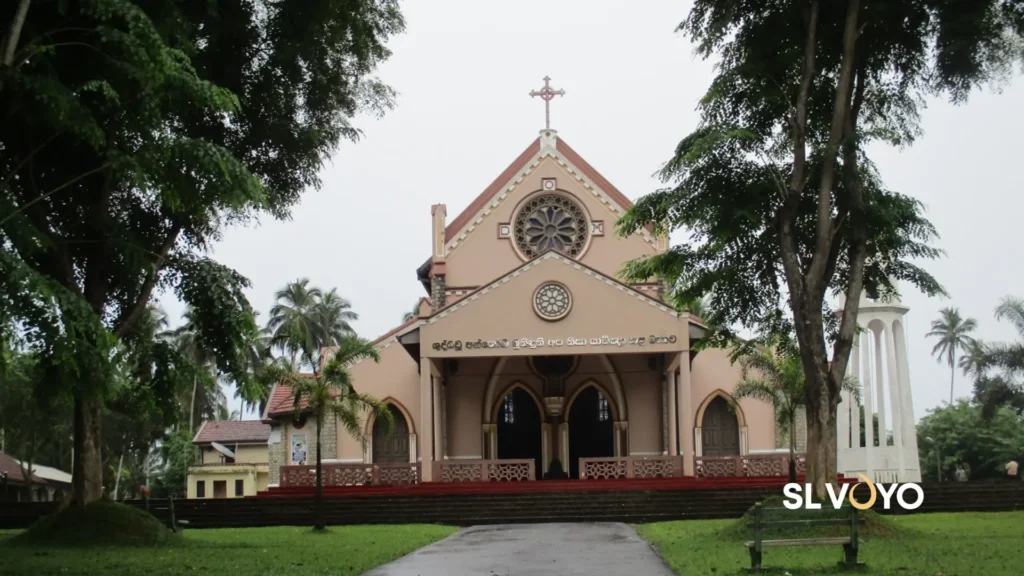
The small town of Wahakotte is about 147 km northeast of Colombo in the Matale District of the Central Province. Even though it is not one of the most famous historical places in Sri Lanka, it is home to the well-known Roman Catholic St Anthony’s Church. The church also has a Benedictine monastery and is often called St Anthony’s Shrine or simply the Wahakotte Church.
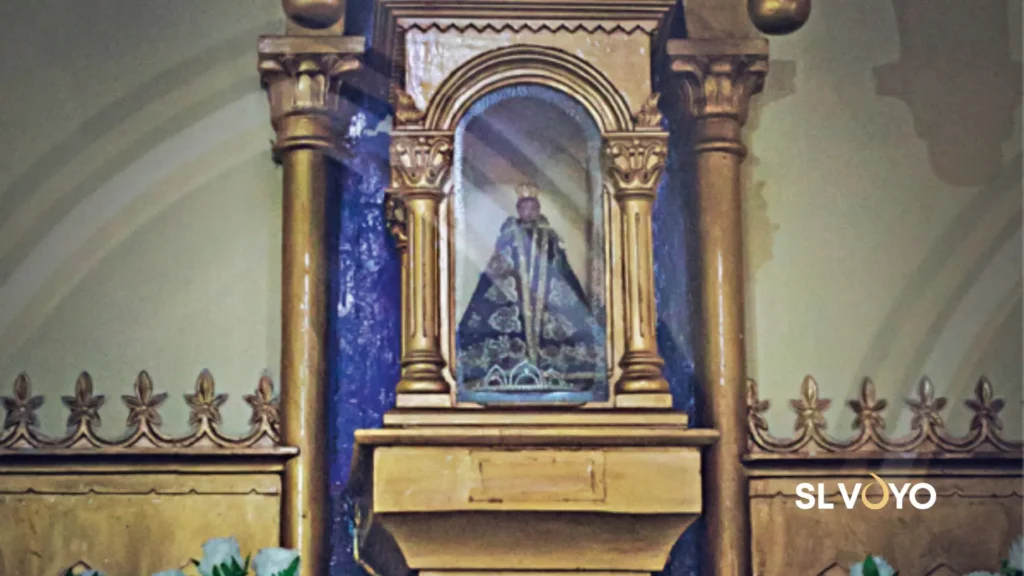
The church is named after the Italian missionary and miracle worker Anthony of Padua, who died in 1231. Inside the church there is a small six-inch statue of the saint, which many people believe has miraculous powers. Because of this belief, Wahakotte Church has become a pilgrimage place for many Catholics in Sri Lanka, even though it is not one of the most famous ones. Still, in a country where religious pilgrimages are common, Wahakotte is worth visiting if you are travelling to Dambulla or Kandy.
To understand the full cultural importance of Wahakotte Church, it is best to visit in mid-June during the “Feast” of St Anthony. The official feast day is on the 13th of June. On the Sunday after that day, the small statue of the saint is carried through the streets of Wahakotte. The procession visits several important places in the nearby area that are connected to the history of the church.
The word “feast” comes from the Portuguese word festa, which means “party”. On this day the town has a festival-like atmosphere, with music, dance, religious performances, and colorful celebrations. Although these celebrations are influenced by local culture, the feast of St Anthony in Wahakotte has become almost a multi-religious celebration.
Another reason for this is an event that happened in the early 20th century. At that time the area was suffering from a very serious drought. The local Buddhists in Kandapaha Korale, the ancient Kandyan district where St Anthony’s Church was located, asked the Catholics of Wahakotte to pray to the Christian God for rain so that their crops could be saved.
It is said that the Catholics prayed for three days, and soon after, heavy rain fell and ended the drought. To show their gratitude, the Buddhists brought gifts to the Catholics and to the saint. They were also accompanied by a Kandyan hewisi band. Hewisi music is a traditional Sri Lankan musical style that was reserved by the Kandyan kings for Buddhist religious ceremonies. Even though it was normally used only in Buddhist rituals, the Buddhists of Wahakotte allowed the church to use this music in their own religious celebrations. Because of this special permission, hewisi music can still be heard during the Feast of St Anthony in Wahakotte today, which is very unusual for a non-Buddhist ceremony.
The name Wahakotte comes from the earlier name Wasala Kotte, which in Sinhala can mean “castle inside the fort” or “castle gate”. According to legend, when the King of Ruhuna, Dutugemunu, defeated the Chola King Elara in Anuradhapura in 194 BC, he built a small fortress in Wahakotte. Some ruins on a nearby hill called Bagakotte, which means “half-fort”, seem to support this story and explain how the town got its name.
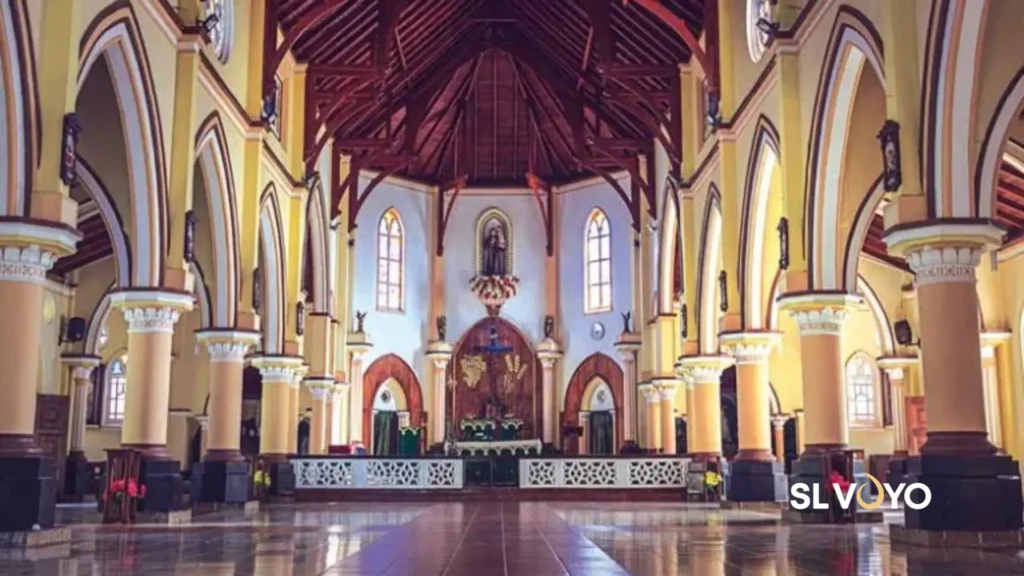
The present St Anthony’s Church in Wahakotte was completed in 1938. It was designed in a Gothic Revival style by an Italian monk named Augustine and replaced a smaller church that had been built in the 1920s. Although there had not been a church in Wahakotte before that time, many people in the area had already become Roman Catholics during the 16th century through the work of Portuguese missionaries.
During the next 200 years, the region became involved in many political and military struggles between the Portuguese colonial empire, the Dutch colonisers who later captured Portuguese territories, and the independent Kandyan Kingdom, which strongly resisted European control.
The Portuguese Catholics spread their religion among the local people mainly by building churches throughout the lowlands of Sri Lanka. The Dutch, however, were strict Protestants and strongly opposed Roman Catholicism. After the Portuguese left, the Dutch tried hard to remove Catholic influence. Meanwhile, the Buddhist Kandyans were less strict about religious choices but considered Wahakotte, located near the foothills of the Central Highlands, as part of Kandyan territory.
Wahakotte’s culture was strongly influenced by these historical conflicts as well as by the arrival of the Goan missionary Joseph Vaz in 1687. His mission in Sri Lanka was to rebuild the Catholic Church and support the many hidden Catholic communities across the island. Later he was officially recognised as a saint by Pope Francis at Galle Face Green in 2015.
During the time of Dutch persecution, Joseph Vaz was secretly protected by villagers in Wahakotte. They hid him in a small shrine that was disguised as a cattle shed. From there he quietly continued his religious work. Today, that place has become a proper shrine and is one of the places visited during the procession that carries the statue of St Anthony on feast days.
The strong connection between Wahakotte Church and farming life can also be seen in another multicultural event called Wap Magula, which takes place in October. Wap is the season when farmers begin planting rice, and Wap Magula is a religious ceremony to bless the land before cultivation. This ceremony is believed to help bring a good harvest.
Although Wap Magula ceremonies in Sri Lanka are usually conducted by Buddhist or Hindu priests, in Wahakotte the ceremony is performed by the parish priest of St Anthony’s Church. Instead of holding the usual Sunday morning mass inside the church, the service takes place in a nearby paddy field. Farmers and their families kneel on the dry earth while praying and singing hymns.
At the end of the mass, farming families bring grain, their ploughs, the buffaloes that pull them, and even modern farming equipment such as tractors to be blessed. Watching this special and unusual ceremony is itself a good reason to visit Wahakotte.
What is it?
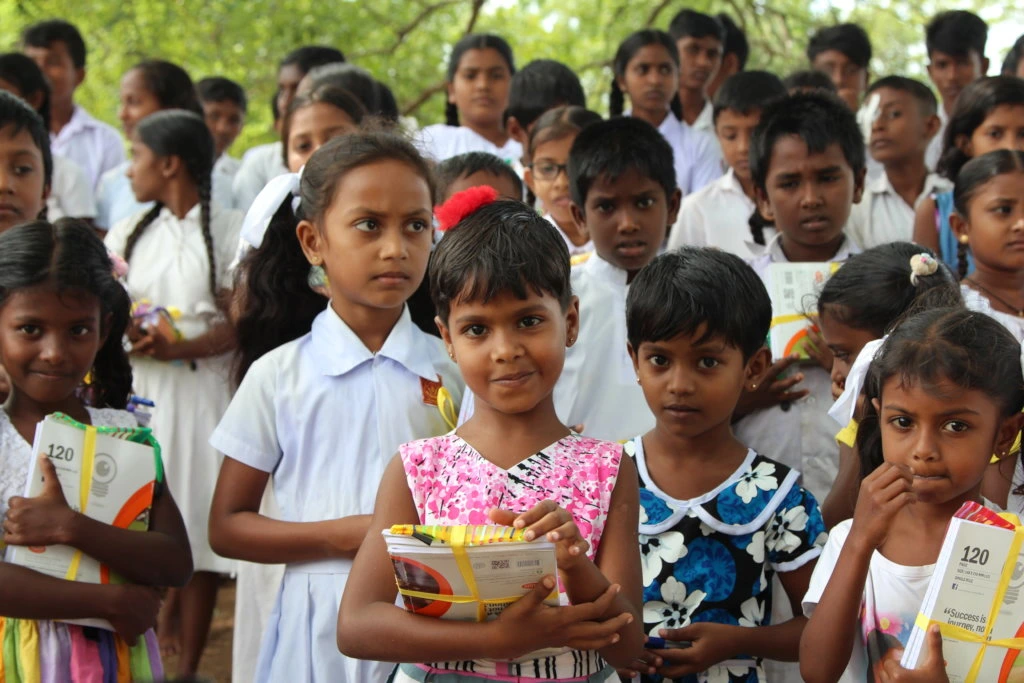
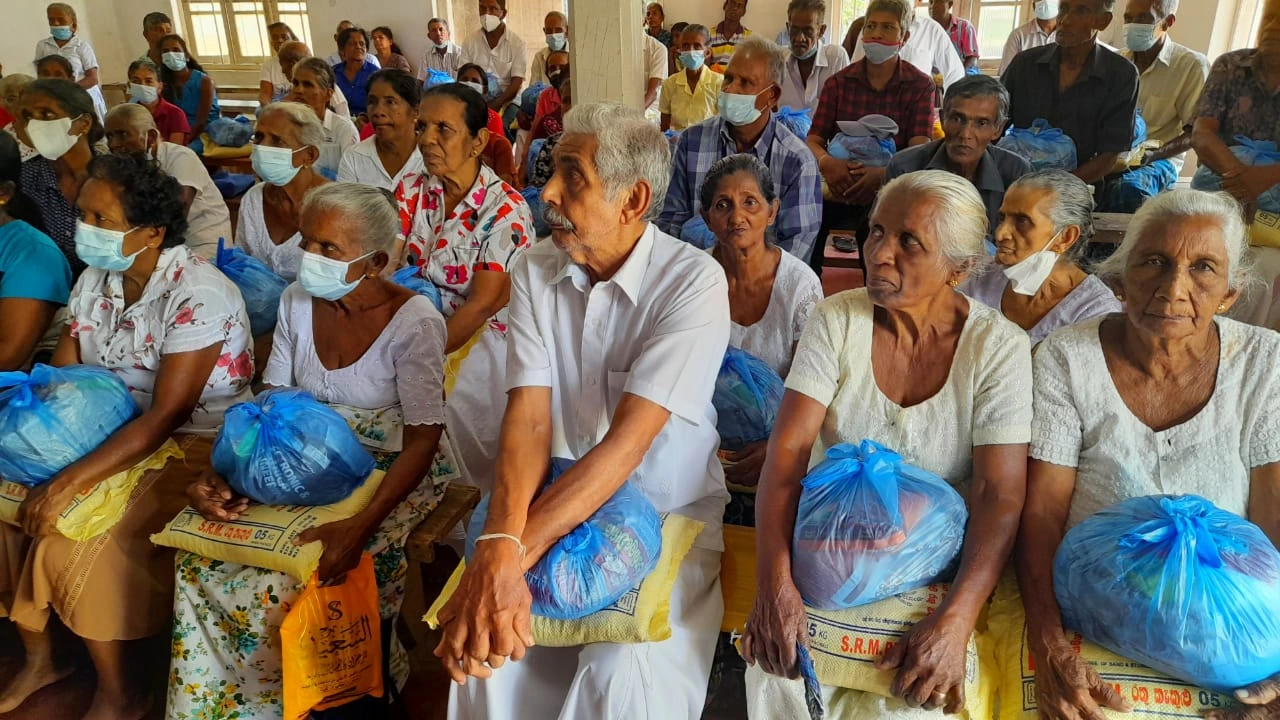
Google Ranked #1, the Heartfelt Expedition is a unique tour that invites tourists to personally engage in charitable events from the perspective of a local donor. Participants will be involved in school initiatives, elderly adoption, and community assistance throughout Sri Lanka.
Discover authentic culture and make a difference by helping local communities.