At SL VOYO, Sri Lanka’s first travel platform, we help travellers discover Sri Lanka through experiences that go beyond basic sightseeing. Whether you are joining our tours or planning your own journey, this is your friendly guide to exploring the island in a simple and meaningful way.
Sri Lanka is home to some of the most impressive ancient stupas in the world. These sacred structures are not only religious monuments but also symbols of history, architecture, and devotion.
Most ancient buildings in Sri Lanka were built for religious purposes, mainly connected to Buddhism. Because of this, sculpture became an important part of temple construction. Kings and rulers encouraged the creation of statues, shrines, and monuments, which helped artists improve their skills over many centuries.
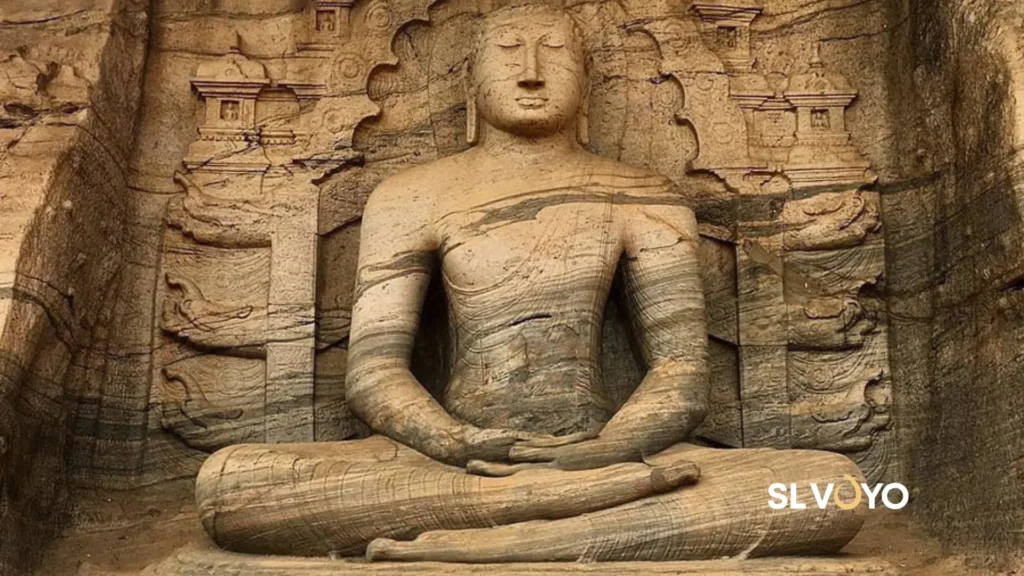
Sculpture making in Sri Lanka reached a very advanced level from around the 1st century AD. Artists were not only skilled in carving stone but also understood balance, proportion, and expression. Many sculptures were carved directly into rock surfaces, while others were created as separate statues and placed in temples or open spaces.
What makes Sri Lankan sculptures special is their calm and peaceful appearance. The faces of Buddha statues often show gentle expressions, closed or half-closed eyes, and a sense of deep meditation. This reflects the spiritual purpose of the sculptures rather than just decoration.
Another important feature is the attention to detail. From the folds of the robe to the posture of the hands, every part of the sculpture was carefully designed. Even today, these details remain clear, showing the high level of craftsmanship.
Buddha statues in Sri Lanka are not random in design. Each posture has a specific meaning and message:
These postures were used carefully depending on the purpose of the statue and its location. For example, meditation poses are often found in quiet monastery areas, while standing statues with Abhaya Mudra are placed in open spaces to symbolize protection.
In addition to posture, artists also focused on body position, known as samabhanga, where the body stands straight and balanced. This gives the statue a natural and stable look.
Overall, ancient Sri Lankan sculptures are not just artistic creations. They are deeply connected to religion, culture, and philosophy. Through these statues, ancient artists were able to express both spiritual meaning and artistic beauty in a simple yet powerful way.
The Avukana Buddha is one of the most famous ancient sculptures in Sri Lanka. It is a massive standing statue carved directly into a rock face.
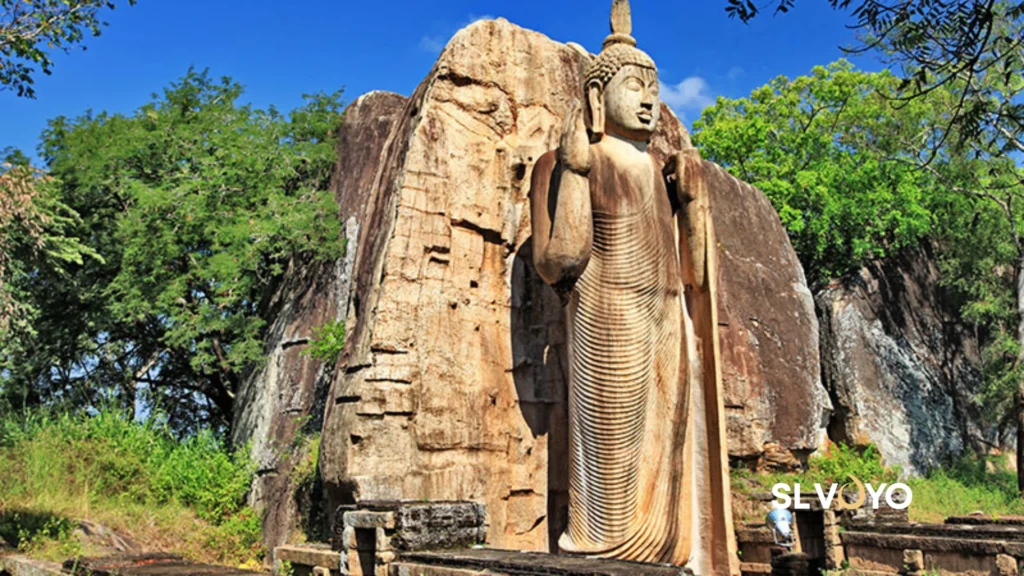
This statue stands about 13 meters tall and shows the Buddha in a calm and balanced standing position. The robe is carefully carved, leaving one shoulder bare, which is a common feature in Sri Lankan Buddhist art.
The right hand is raised in the Abhaya Mudra, symbolizing protection and reassurance. Although the statue is attached to the rock, it stands on a separate lotus pedestal, showing the advanced skill of the sculptors.
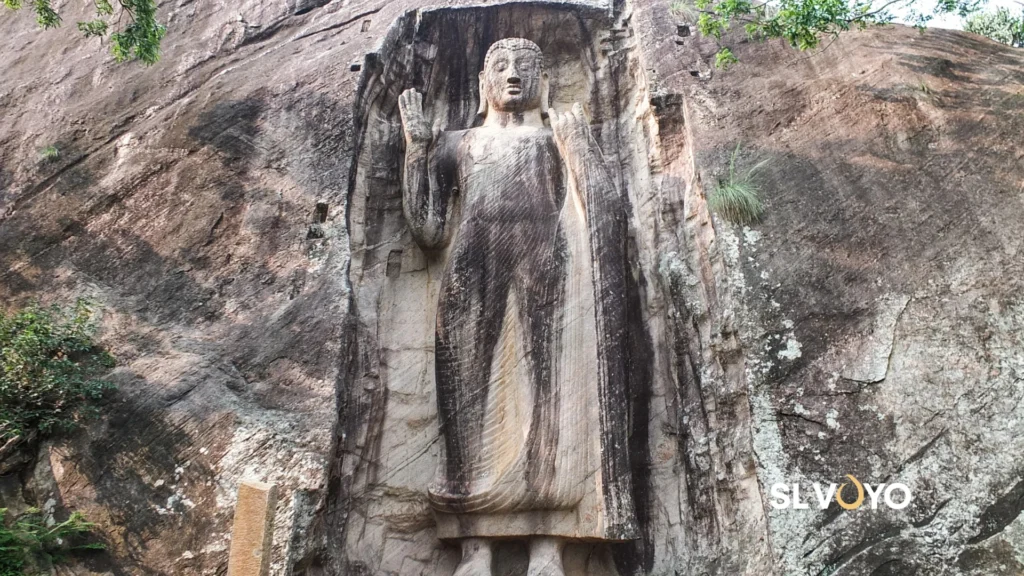
Sasseruwa is another important rock-carved Buddha statue located in a forest monastery area. It is slightly smaller than Avukana but still impressive in size.
According to local stories, this statue was created during a competition between a master and his student. The Avukana statue was completed first, while the Sasseruwa statue remained unfinished.
The Buddha here also shows the Abhaya Mudra, with simple but powerful design details. The unfinished base and surrounding structures give visitors a glimpse into the construction process of ancient sculptures.
Buduruvagala is home to a group of large rock carvings, including the tallest Buddha statue in Sri Lanka.
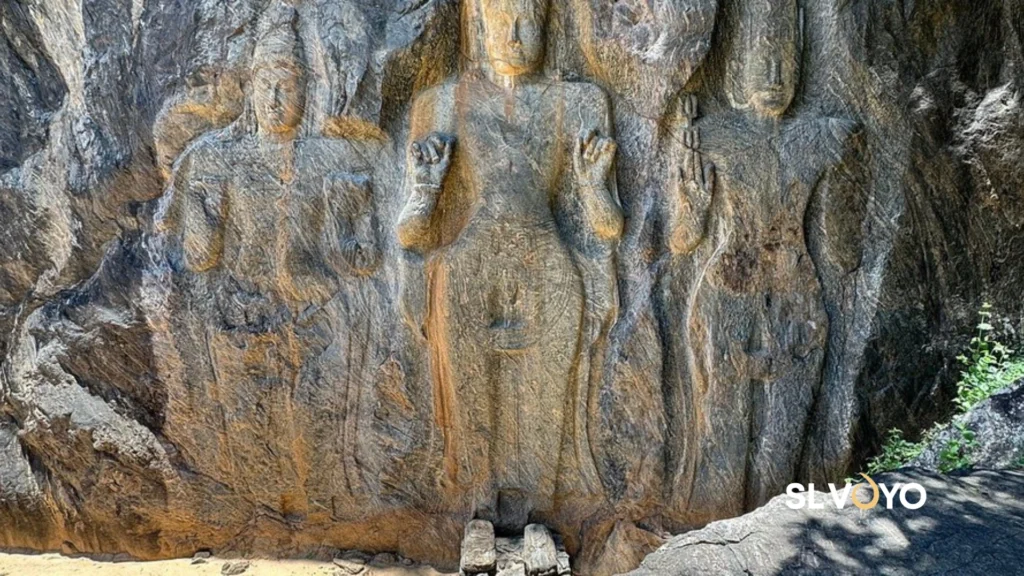
The central Buddha stands over 15 meters tall and is surrounded by six other figures. These include Bodhisattvas such as Avalokitesvara and other important figures from Mahayana Buddhism.
The statues are arranged carefully along the rock surface, creating a balanced and meaningful composition. Their size and presence show the spiritual importance of these sculptures.
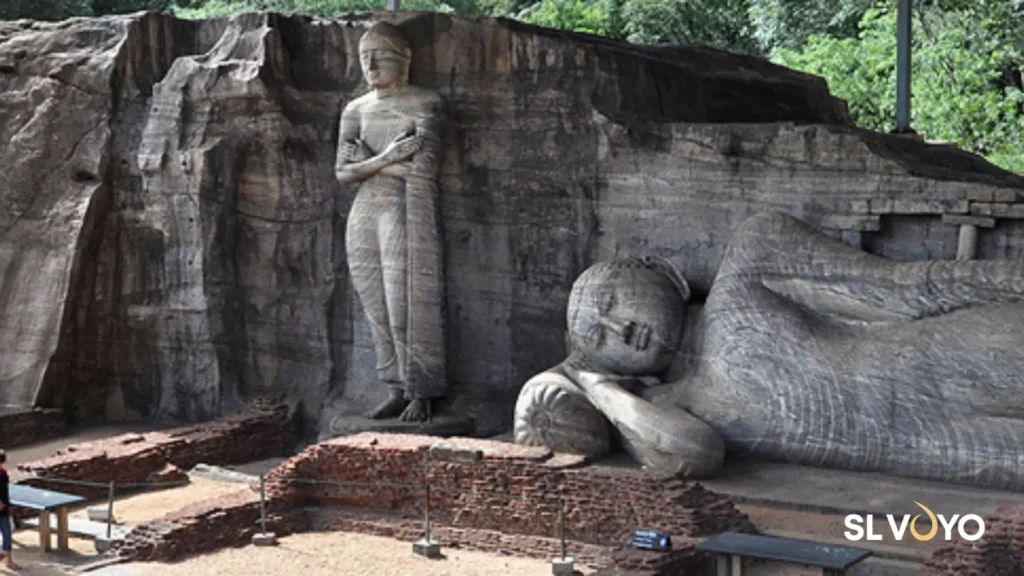
Gal Vihara in Polonnaruwa is one of the most famous sculpture sites in Sri Lanka. It features four large Buddha statues carved from a single granite rock.
In Sri Lankan sculptures, the position of the Buddha is just as important as the hand gestures. Each pose tells a story or represents a moment in the Buddha’s life. Ancient artists used these positions to express calmness, strength, and spiritual meaning.
The standing Buddha is one of the most common forms. It usually represents protection and blessing, especially when combined with the Abhaya Mudra. This pose gives a sense of movement and presence, as if the Buddha is watching over people. Many large statues like the Avukana Buddha use this position.
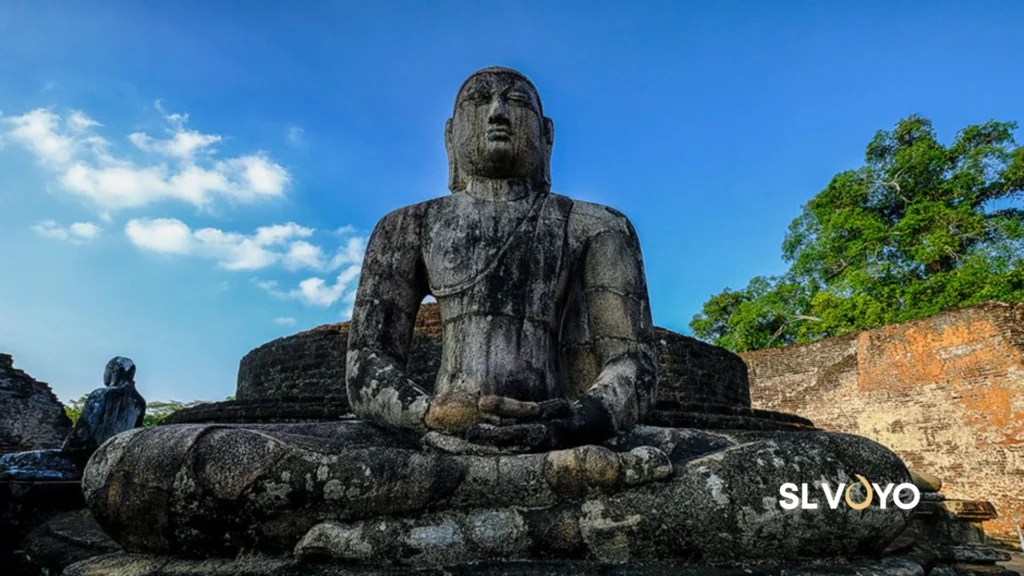
The seated Buddha is often shown in meditation. This is the most peaceful and spiritual pose. The legs are crossed, and the hands rest on the lap in the Dhyana Mudra. It represents deep concentration, inner peace, and the path to enlightenment. These statues are commonly found in temples and quiet monastery areas.
The reclining Buddha shows the Buddha lying on his side. This position represents the moment of entering Parinirvana, or the final passing away. It symbolizes the end of suffering and the achievement of complete enlightenment. The reclining statue at Gal Vihara is a well-known example of this form.
Another important posture is the walking Buddha, although less common in Sri Lanka. This pose shows movement and represents the Buddha spreading his teachings.
These statues show the Buddha in different positions:
The standing statue is about 7 meters tall and is known for its calm expression. The reclining Buddha, about 14 meters long, is especially admired for its detailed carving, including the pillow and facial features.
These sculptures represent the peak of Sri Lankan rock carving and artistic skill.
Sri Lanka has many other important sculptures across the island.
Highlights:
These sculptures show a mix of religious meaning, artistic beauty, and cultural history.
Ancient sculptures in Sri Lanka are much more than artistic creations. They are a powerful link to the island’s history, religion, and cultural identity. These sculptures help us understand how Buddhism spread across the country and how deeply it influenced daily life, art, and architecture. At the same time, they reflect the incredible skill of ancient craftsmen, who were able to carve detailed and expressive figures using simple tools and techniques.
These works also play an important role in preserving Sri Lanka’s cultural heritage. Many of these sculptures have stood for over a thousand years, continuing to represent the beliefs and traditions of past generations. Today, they attract travellers, historians, and researchers from around the world who come to learn about Sri Lanka’s rich past. Beyond their historical and artistic value, these sculptures also hold deep spiritual meaning, offering a sense of peace and inspiration to visitors even in the present day.
If you want to explore these sculptures, here are some simple tips:
What is it?
Google Ranked #1, the Heartfelt Expedition is a unique tour that invites tourists to personally engage in charitable events from the perspective of a local donor. Participants will be involved in school initiatives, elderly adoption, and community assistance throughout Sri Lanka.
Discover authentic culture and make a difference by helping local communities.