At SL VOYO, Sri Lanka’s first travel platform, we help travellers go beyond basic sightseeing and experience the island in a more meaningful way. Whether you are joining our tours or planning your own adventure, here is our friendly guide to discovering Aberdeen Falls – one of Sri Lanka’s most picturesque and peaceful off-the-beaten-path cascades.
The Hidden Gem of Ginigathena and Nuwara Eliya
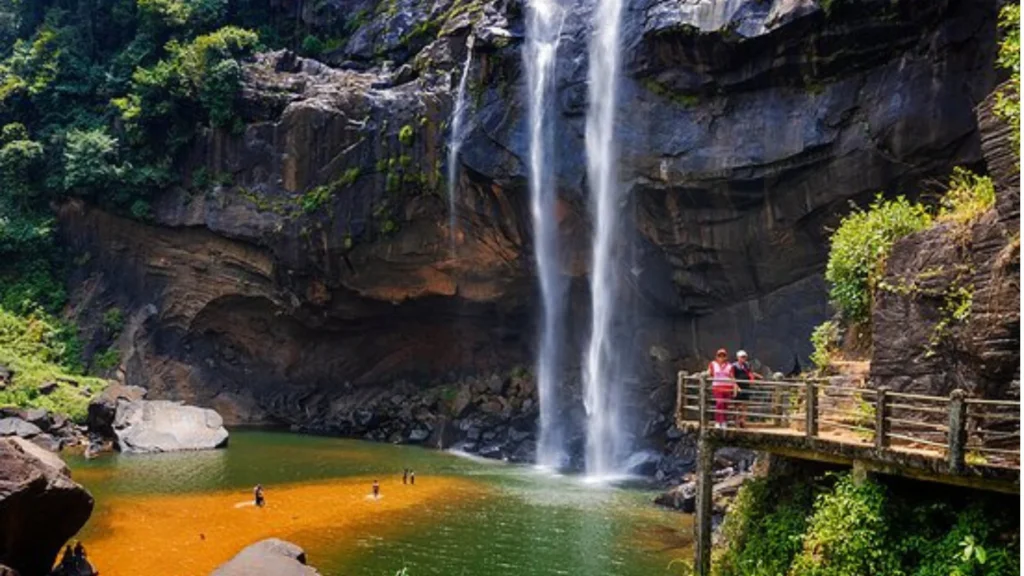
Sri Lanka’s central highlands are full of famous tourist hotspots, but they also hide tranquil sanctuaries like Aberdeen Falls. Standing proudly at 98 meters tall in the Nuwara Eliya District, this magnificent waterfall is formed by the Kehelgamuwa Oya, a major tributary of the Kelani Ganga.
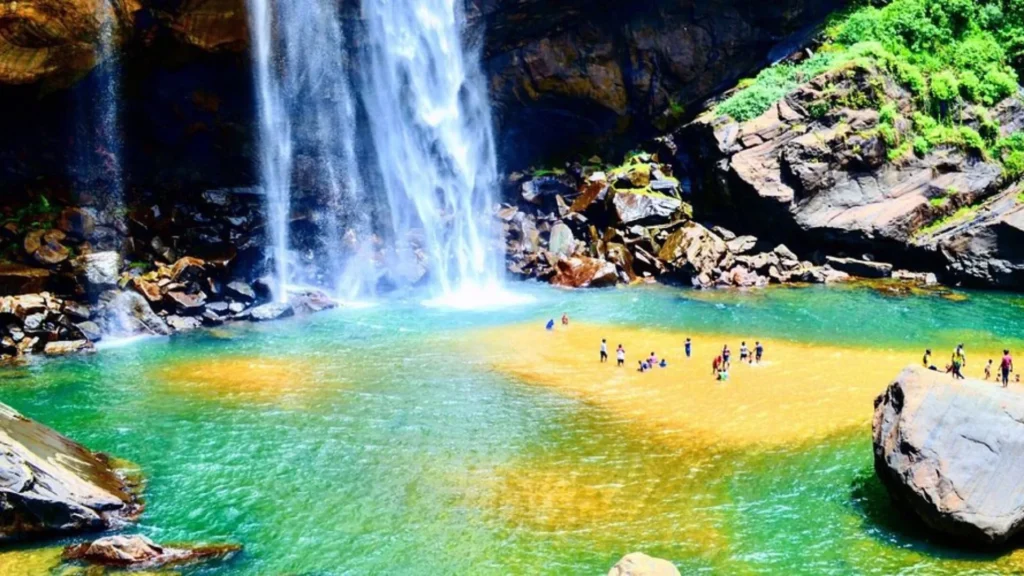
Surrounded by steep rocky cliffs and thick jungle greenery, Aberdeen Falls is widely considered one of the most picturesque waterfalls on the island. Because it remains tucked away from the main tourist crowds, it offers a peaceful retreat for travelers looking to escape into pure nature.
Scottish Roots and Local Folklore
Like many landmarks in Sri Lanka’s hill country, Aberdeen Falls carries a piece of colonial history. The waterfall was named after the nearby Aberdeen tea plantation. A large number of tea estates established during the British colonial era were given Scottish names and toponyms, which still survive today.
Beyond its plantation history, local folklore in the misty highlands connects Aberdeen Falls directly to the neighboring Lakshapana Falls further south through a legendary 5km long underground tunnel. While hydroelectric projects and water reservoirs built along the Kelani Ganga tributaries have reduced water volumes compared to the past, the Kehelgamuwa River continues to flow steadily, rarely drying out completely except during severe dry spells.
The Jungle Staircase and Observation Platform
Reaching the waterfall is an adventure that immerses visitors right into the heart of the jungle. Similar to nearby Lakshapana Falls, Aberdeen Falls can be reached by walking down a long flight of stairways consisting of a few hundred steps through thick forest trees.
This short access route leads directly to a small, beautifully framed observation platform built close to the natural pool below. While there are signboards along the route from Norton Bridge to the car park, finding the exact turn-off can be a little tricky, adding to its hidden-treasure feel.
Swimming Caution and Off-the-Beaten-Path Charm
For adventurous travelers who want to get even closer, climbing down some boulders from the observation platform leads to the very inviting and clear pool at the base.
However, visitors should exercise great caution. Due to strong underwater currents and shifting sand, swimming can be dangerous and is generally not recommended, especially for children. Despite this, the stunning scenery and quiet atmosphere make it a fantastic spot for photography and peaceful reflection away from the crowds.
Table of Contents
Tours you might like
We care about our people. That’s why we offer Heartfelt Expedition
What is it?
Google Ranked #1, the Heartfelt Expedition is a unique tour that invites tourists to personally engage in charitable events from the perspective of a local donor. Participants will be involved in school initiatives, elderly adoption, and community assistance throughout Sri Lanka.
Discover authentic culture and make a difference by helping local communities.